Capstone Projects Bring Start-Up Culture to KLU
For the past several years, the “Capstone Project” has been an established component of master’s degree programs at KLU. The project gives students the chance to come into direct contact with companies, while also allowing said companies to get to know the managers and employees of tomorrow. To date, students have performed previously agreed duties for our corporate partners. In 2021 the Capstone Project rolled out a new format: KLU students founded their own start-ups.


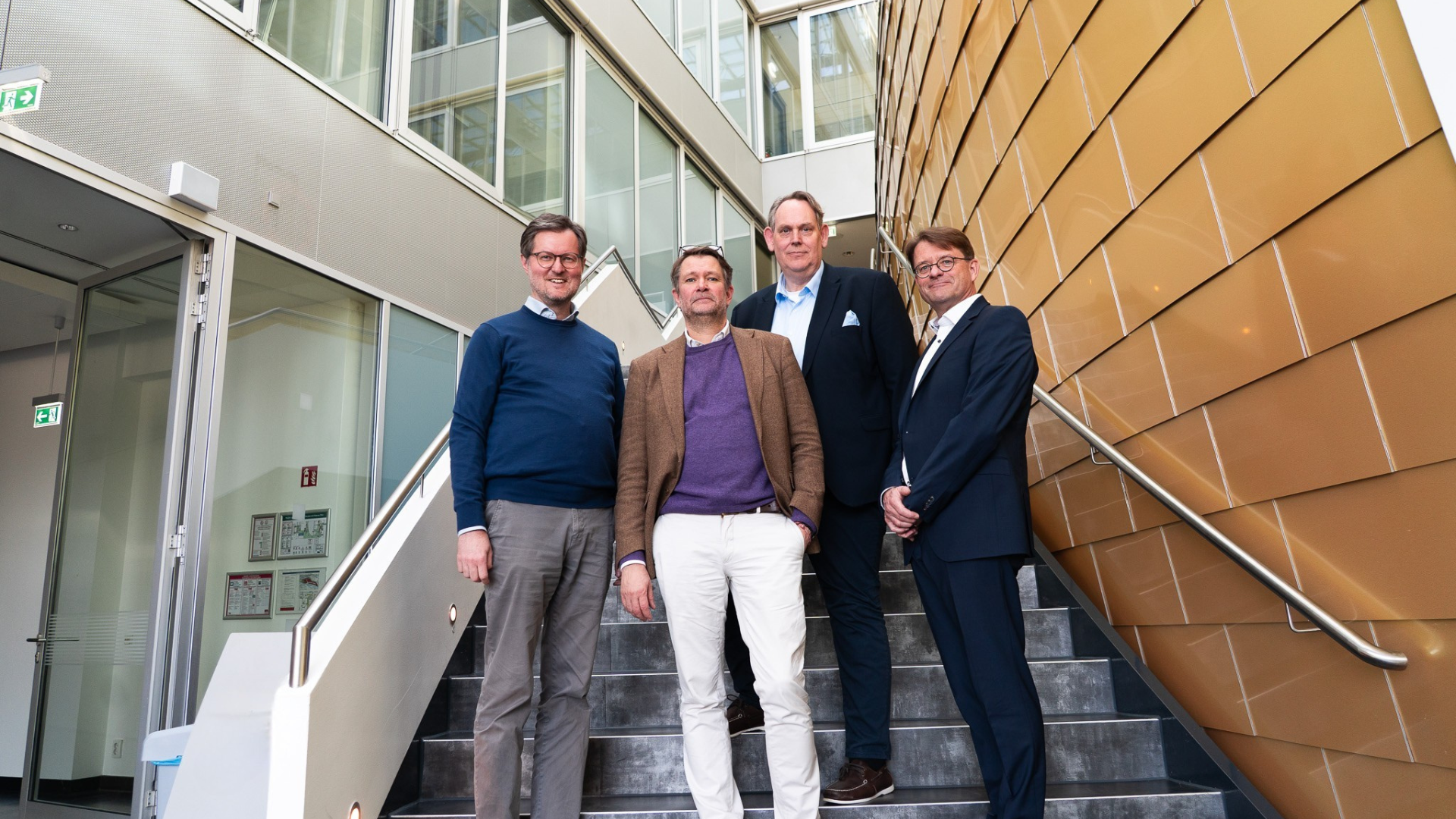
“Our goal was to give students truly comprehensive insights into the topic of start-ups and founding a new business,” explains Prof. Björn Michaelis, who supervises the Capstone Project together with Ph.D. candidate Niklas Kühsel. The project is supported by our long-standing partner Accenture, a corporate consulting firm. In just four months, the students progressed from their initial idea to a complete business plan.

Initiative wanted
“This format calls upon students to demonstrate initiative,” says Niklas Kühsel. Aside from smaller input units, e.g. on creating a business plan, the focus was on project-based work in small groups. In this regard, two groups each worked on their own start-up: from the idea, to market research and the business plan, to marketing and presenting the pitch – all the steps involved in successfully founding a company were covered. A unique highlight: Accenture supported the students by providing external input. Experts worked with the students on the content and e.g. on creative brainstorming. “Being able to integrate the views and experiences of experts from the sector into how we approached the topic was a major advantage,” says Maximilian Schlüter (M.Sc. Management), who took part in the project. “Having the opportunity to give the final presentation at Accenture’s offices was the icing on the cake.”


Mobility start-ups
The students ultimately opted to pursue two ideas: one on transport for the last mile and one on e-mobility. “Sharge Mobility” decentralizes charging for electric vehicles by producing and renting out portable chargers directly to customers – no matter where they are. “Naboo Delivery,” which Maximilian Schlüter participated in, uses robots and drones to offer efficient, ecological transport options for the last mile – and may soon become a reality. “Our analysis revealed a demand for this type of service. We’re considering pursuing more detailed planning for a start-up once we’ve finished our studies,” says Maximilian.
Further information
- One Pager: Naboo Delivery
- One Pager: Sharge Mobility
- News: The Capstone Project at KLU